
Originally published February 10, 2025. Updated August 6, 2026.
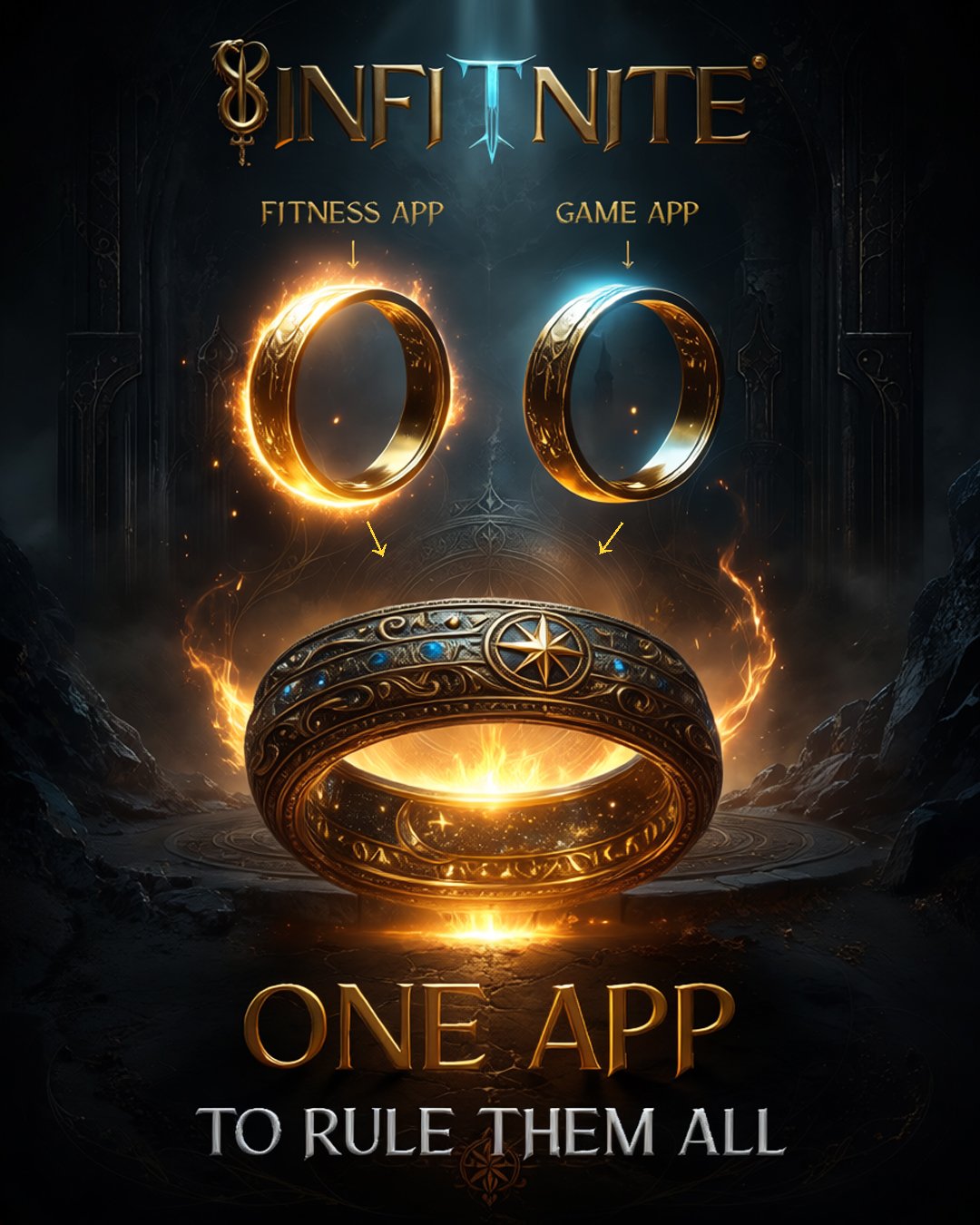
When I first wrote this article in February 2025, Infitnite needed two connected apps to deliver the experience I was trying to build. One handled the training, nutrition, and day-to-day work. The other handled the RPG world and progression.
Infitnite 5.0 finally brings those two sides together!
The real problem hasn’t changed
You know that feeling when you open the app store looking for something to help with your fitness and suddenly you’re staring at workout trackers, meal planners, step counters, mindfulness apps, habit trackers, sleep apps, and a thousand other options?
You download a few. Try them for a week. Slowly stop opening them. Then, a few months later, you start over with another collection of apps.
Rinse and repeat.
That was the problem I originally wrote about in this article.
We have more tools and information than ever. The harder part is actually using them consistently and understanding how everything fits together.
Your workout lives over here.
Nutrition lives somewhere else.
Sleep and recovery have another app.
Mindset and habits might have their own system.
Then if you want any kind of game or RPG experience layered on top, that usually becomes another app entirely.
You end up managing fitness instead of just doing it.
Infitnite was built to connect those pieces and give the effort itself more meaning.
The way we originally did that was with two apps.
Why Infitnite had two apps in the first place
When this article was originally published, Infitnite was split between the Fitness App and Game App.
The Fitness App handled most of the real-world execution: workouts, nutrition, habits, Skills, tracking, recovery, and the things you were actually doing day to day.
The Game App handled the RPG side: your Warrior Avatar, XP, AXP, Missions, Campaigns, Achievements, community, progression, and the world surrounding all of that effort.
By the end of 2025, I described the split pretty simply in our 2025 Infitnite Recap.
One side handled structure and execution.
The other handled immersion, progression, and meaning.
At the time, it worked.
More importantly, it let us prove the larger idea.
A workout could affect something beyond a workout log.
Nutrition could become part of a progression system.
Habits could develop Skills.
The things you were already trying to improve in real life could power an Avatar and a game built around that same progress.
But there was still a problem.
You had to move between two apps to experience both sides of it.
Two apps solved one problem and exposed another
This became more obvious the longer we used the system.
We had built Infitnite partly because people were tired of bouncing between disconnected fitness tools, but Infitnite itself still asked you to move between two platforms.
You could finish the work in one place and then go somewhere else to experience what that work meant inside the game.
The systems were connected conceptually. They just couldn’t be connected as deeply or immediately as I wanted them to be.
Part of that came down to how Infitnite was built.
Previous versions relied on third-party platforms and services to deliver different parts of the training, coaching, community, tracking, and gaming experience.
Those tools allowed me to build versions of Infitnite that otherwise wouldn’t have existed, but I was always building inside somebody else’s infrastructure.
There were limits to what could communicate with what.
There were limits to the interactions I could create.
Sometimes I knew exactly what I wanted to change and simply didn’t control the part of the experience that needed to change.
By the end of 2025, I knew where this was heading.
The two-app system had been a big step forward. There was still another step left.
Everything needed to live together.
Infitnite 5.0 brings both sides into one app
That’s what changed with Infitnite 5.0.
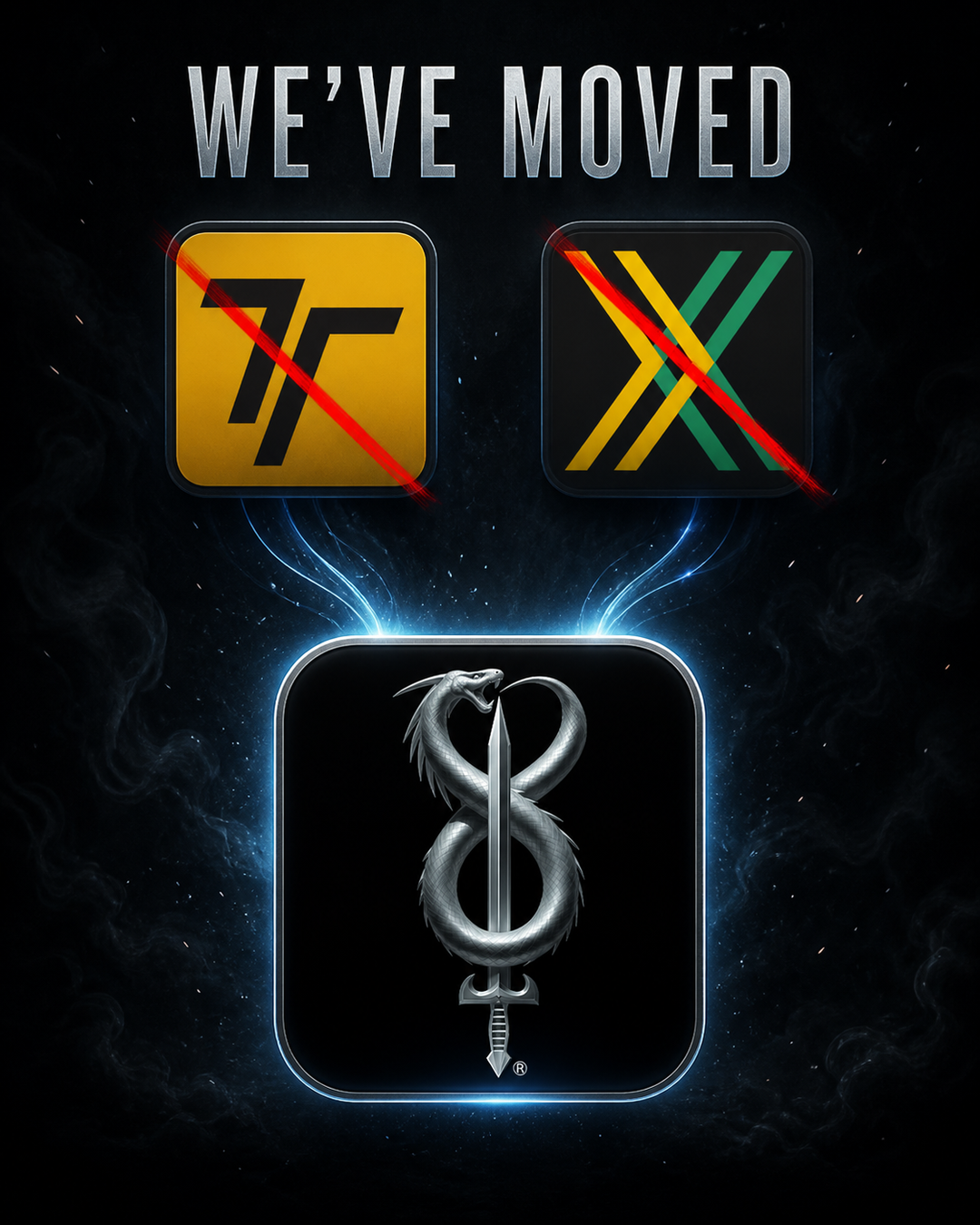
The separate Fitness App and Game App are no longer the current Infitnite experience.
Infitnite is now one Fitness Fantasy role-playing game built on its own custom platform and available on iPhone, iPad, Android phones, and Android tablets. One Warrior Account carries your supported progression across your phone and tablet.
You don’t train in one app and then open another app to play the game.
The things you do in real life are part of the game itself.
Your workouts become Combat Quests.
Nutrition develops Alchemy.
Your mindset, habits, and learning develop Intellect.
Your relationships, reflection, community activity, and impact on others develop Influence.
Those actions earn progress inside Infitnite and develop your Warrior Avatar through systems such as XP, Skills, Missions, Campaigns, Achievements, Rank, and the progression surrounding them.
What actually changed by bringing everything together
Moving from two apps to one sounds simple when you reduce it to a sentence.
It wasn’t.
The bigger change is that the fitness systems and RPG systems can finally be designed as parts of the same experience instead of being built separately and connected afterward.
Combat is a good example.
Infitnite 5.0 includes nearly 800 exercise-based monsters and more than 1,500 exercise variations that can be used to build custom Combat Quests. You can adjust around the equipment available to you, replace movements that don’t work for your body, and use muscle maps to understand where the demands of the Quest are actually going.
Living Quest pushes that further by letting a workout unfold based on the choices you make while you’re training instead of requiring every decision to be locked in before you begin.
And Combat is only one part of the system.
Inside the same app you can now:
train through Combat
develop nutrition through Alchemy
build mindset and habits through Intellect
connect, reflect, and contribute through Influence
develop your Warrior Avatar and progression
complete Quests, Missions, Skills, Campaigns, and Achievements
move between supported phone and tablet devices through the same Warrior Account
The point isn’t that everything needs to become a game mechanic just for the sake of gamification.
It’s that the different parts of your health don’t exist separately in real life, so the system helping you develop them shouldn’t feel like a pile of unrelated tools either.
The game finally sees more of the work
This is probably the part I care about most.
When you complete something, I want Infitnite to understand what happened and give that action somewhere to go.
A workout shouldn’t disappear into a history screen and become a number you never look at again.
The same goes for the nutritional choices you make, the habits you practice, the Skills you develop, and the other things you keep showing up for.
That effort should accumulate.
It should affect something.
It should give you feedback and another reason to return.
That was always the idea behind separating the Fitness App and Game App in the first place. One captured what you did, while the other tried to give it context inside a larger world.
Now those two jobs can happen in the same place.
Building our own platform changed what we can improve
There’s another side to this that you don’t necessarily see while you’re playing.
For the first time, we have direct control over nearly every corner of Infitnite.
The progression systems, training tools, nutrition systems, community, interface, audio, accounts, and the connection between your real actions and your Warrior are all part of the platform we’re actually building.
That became especially important during Alpha and Beta.
Players found bugs, recorded their screens, questioned decisions, pointed out confusing moments, requested features, and showed us where things that worked in theory still needed work once somebody actually had the app in their hands.
More than 150 fixes, improvements, additions, and design changes came out of that testing before global launch.
And we’re still working through that process now.
Having our own platform doesn’t mean every problem magically disappears. It means when something needs to change, we can actually work on the thing that needs to change instead of trying to build around somebody else’s limitations.
You can start without paying for the answer
One other major part of the current experience is Pathfinder.
Pathfinder is the free foundation of Infitnite. It isn’t a temporary trial that gives you five minutes with the game and then asks you to pay before you understand what you’re looking at.
You can build your Warrior Avatar, enter the core world, progress through all four disciplines, build Combat Quests, develop Skills, complete Missions, and earn real progression without subscribing.
There are no ads, microtransactions, battle passes, energy gates, or a way to buy the levels and power you’re supposed to earn through your own actions.
Vanguard is there for Warriors who want Infitnite to take a bigger role in providing structure, advanced tools, expanded locations, deeper analytics, guidance, and Magical Intelligence.
I’m going to give Pathfinder and Vanguard their own dedicated breakdown because that decision deserves more than a paragraph buried inside this article.
For this one, the important part is that you can start playing Infitnite and find out whether the experience actually works for you before deciding how deep you want to go.
So what happened to the two apps?
They did their job.
The Fitness App helped establish the systems supporting the real work.
The Game App gave that work progression, identity, community, and a world around it.
Together, they got Infitnite much closer to what I had pictured when I started building it.
They also made the remaining gap obvious.
When I originally published this article, two apps were the best answer I had to the problem.
Today I have a better one.
If you found Infitnite through this article because you were looking for the Fitness App or Game App, you don’t need to download two things anymore.
Build one Warrior.
Enter one world.
Then go do something in real life that moves both of them forward.
Conquer the day, Warrior!
Recent Announcements
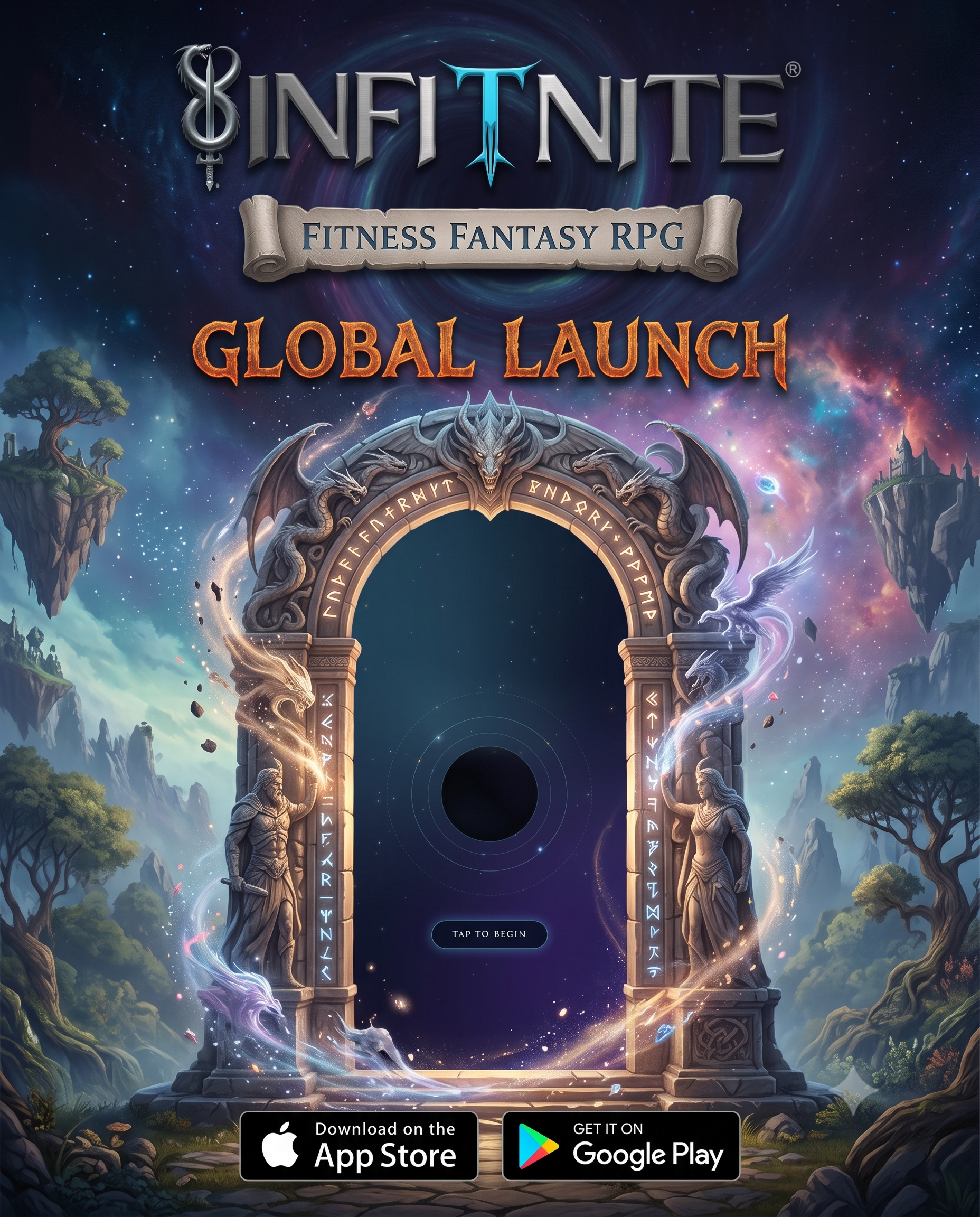
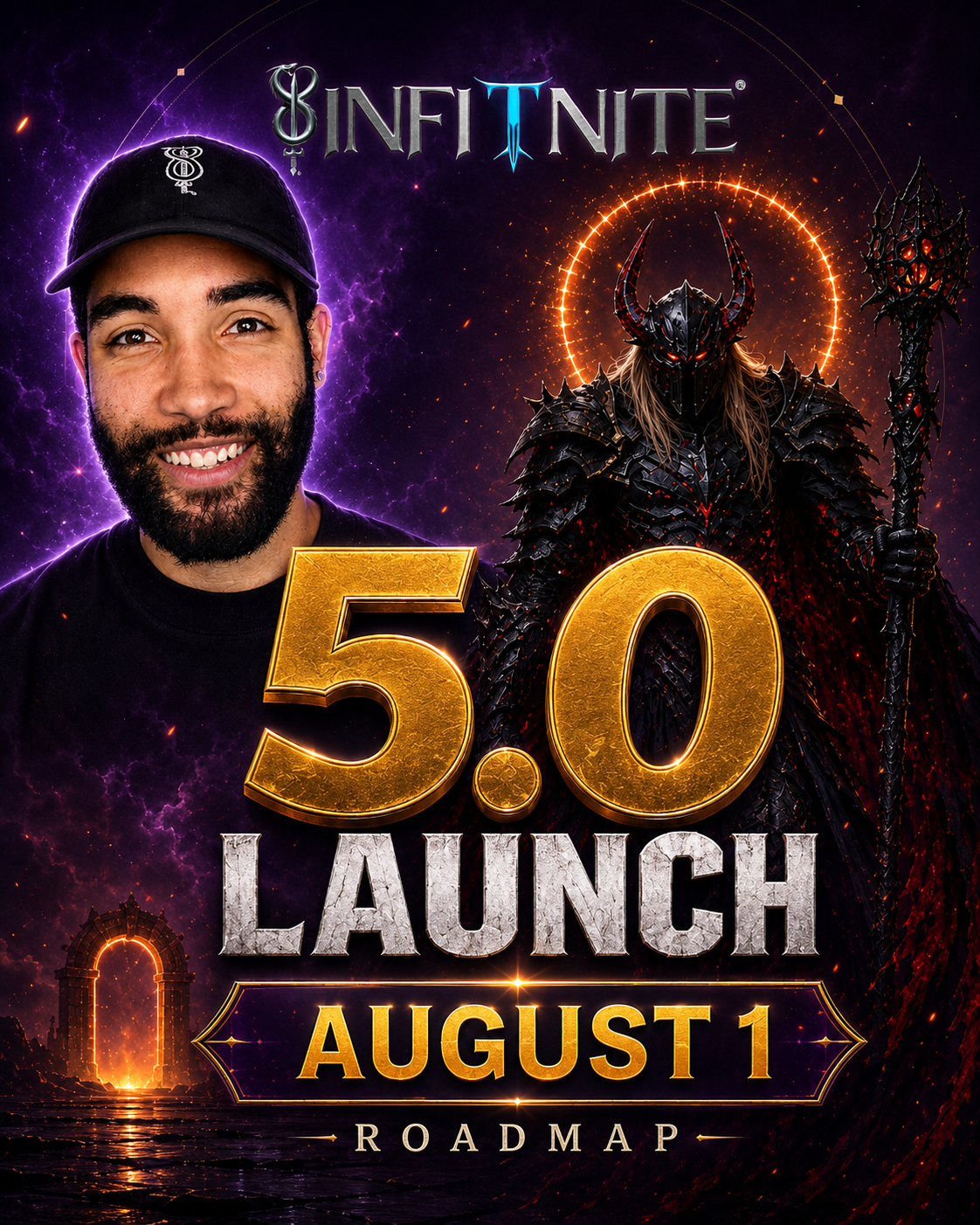
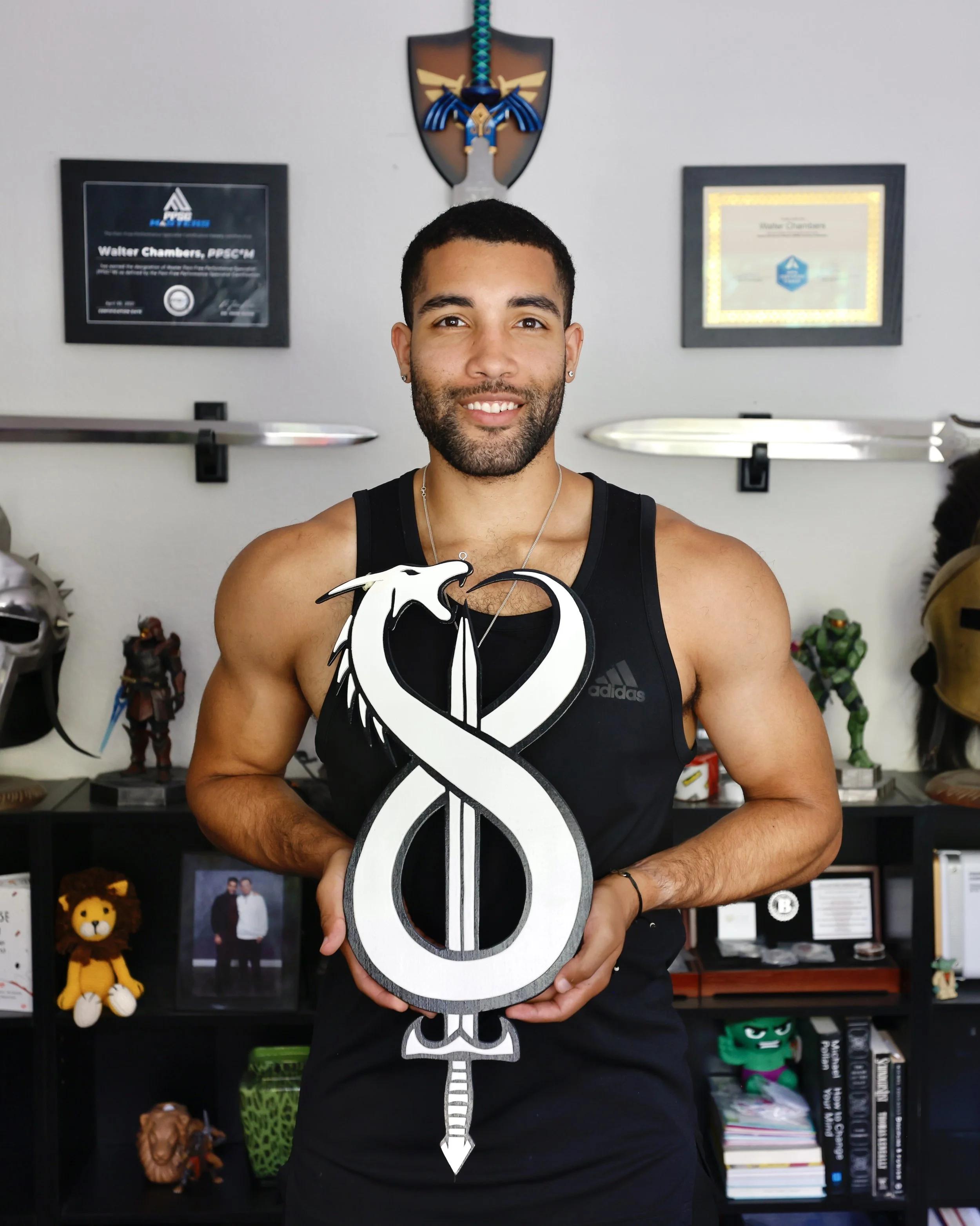



Five years after Infitnite first launched, Infitnite 5.0 is now available on mobile & tablet for Apple and Android. Begin free, explore the full launch experience, and see how our Alpha and Beta players helped shape it.