
By Walter Chambers
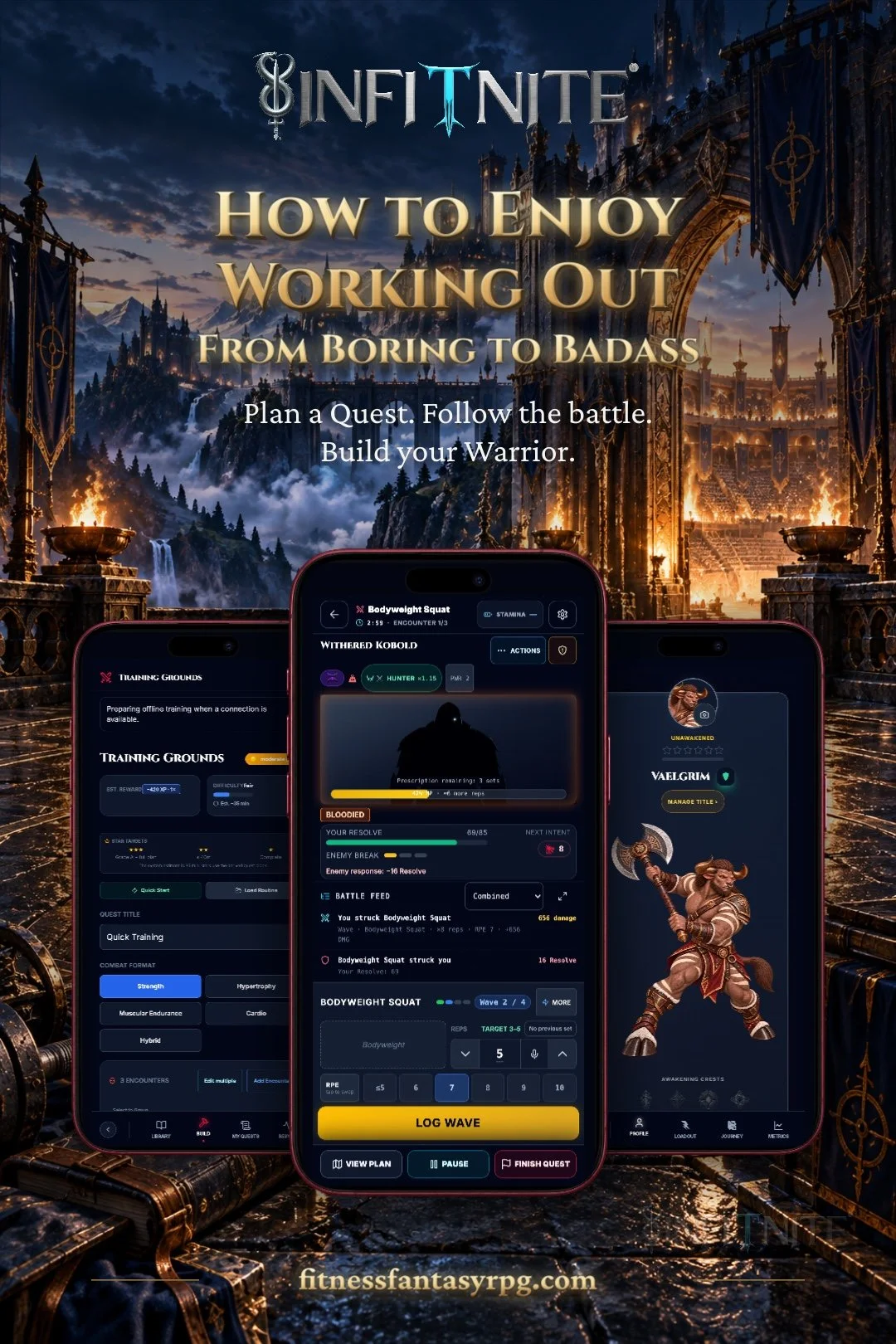
How do you enjoy working out when knowing it’s good for you isn’t enough to make the next session appealing? A goal to prepare for, a battle to follow between sets, and a character you develop through the work you complete can give familiar training another kind of payoff. That’s the idea behind Infitnite and its Fitness Fantasy RPG: your real activity helps you progress through a role-playing game. You’re the Warrior, the player, and your Avatar is your fantasy character in that game.
Give your next workout something to look forward to
Start with a workout that fits you, your equipment, and what you want to work toward. If you already enjoy your routine, you can keep it. The question is what you’d like the experience of doing it to give you.
For your next session, try this:
Before: choose a clear objective for the workout you’ve planned. Give yourself something specific to prepare for and finish.
During: record the work you actually complete. Use your previous sets as a reference when they’re available, and give yourself something to follow between sets.
After: review what you did and what you earned. Notice which part of the experience you want to return to next time.
You can plan and record a workout in a notebook. You can also bring that workout into a game. Infitnite connects the same training to monster battles, abilities you develop, and a character whose progress comes from the activity you record.
That’s the approach I’ll walk through here: giving the workout itself a challenge, while keeping your real training at the center.
Knowing why you should exercise doesn’t always make you want to
You can understand the value of exercise and still struggle to get interested in the next session.
Maybe you’re looking at a workout plan and trying to picture yourself doing it. Maybe you already have a routine that works, but you sometimes find yourself counting down the exercises until you can go home. Or maybe you love training, track every set, and enjoy the challenge of getting better. You’d still welcome something else to work toward alongside it.
Those are different starting points. I want Infitnite to have something to offer each of them.
The physical changes you’re working toward take time to see. You might complete a useful workout today without seeing a visible difference afterward. The work still matters, but the reason you’re doing it and the reward you can feel right now aren’t always close together.
That leaves a practical question: what makes the session itself worth looking forward to?
A workout can have a purpose beyond getting through the list. You can prepare a Quest you want to finish, follow a fight as you record your sets, work toward abilities you can use, and see the progress you earned when you’re done. The training remains yours. Infitnite gives you a game to participate in through that training.
What workout tracking already gives you
Before getting into the monsters, I want to give the workout notebook its due.
Writing down what you did helps you remember it. You have a record of the exercises you performed, the weight you used, and the reps you completed. When you return to an exercise, you can compare sessions instead of relying on your memory.
That’s useful whether you record everything on paper or in an app. If keeping a notebook already helps you train, there’s value in that habit. And if you enjoy tracking, you don’t need to be talked into finding it boring for Infitnite to make sense.
But remembering your workout and having something to engage with during it are two different benefits. A log can tell you what happened last time without giving you a challenge you want to finish today. Entering the next row of numbers might be satisfying on its own, or it might feel like another task.
Infitnite connects those entries to a battle. A recorded set contributes to your training history and moves the encounter forward. Across completed workouts, that effort also contributes to the Warrior you’re developing.
If you’ve never tracked, there’s something happening with the effort you record. If your routine feels repetitive, there’s a fight to follow and finish. If you already love training, your Avatar gives the work you’re proud of a visible identity you can keep building.
What research says about game features and activity
There’s evidence worth taking seriously, with limits. A 2024 review of 36 trials involving 10,079 participants compared digital health apps with and without game features. Gamified interventions increased daily steps by an average of 489, with a 95% confidence interval of 64 to 914. The authors described the increase as slight.
That result concerns activity measured in steps. It doesn’t establish that Infitnite improves workout completion or strength, and it doesn’t test the battles described below. It gives context for the idea of adding game features. What I can show you directly is how your planned workout, recorded sets, and earned progress fit together in Infitnite.
Before the workout: build a Quest you want to complete
Infitnite calls a workout paired with monster encounters a Combat Quest.
Training Grounds is where you build your own workout Quests. Choose exercises that fit you and your equipment, plan the work you’ll perform, and set up the monsters and boss battles you’ll face.
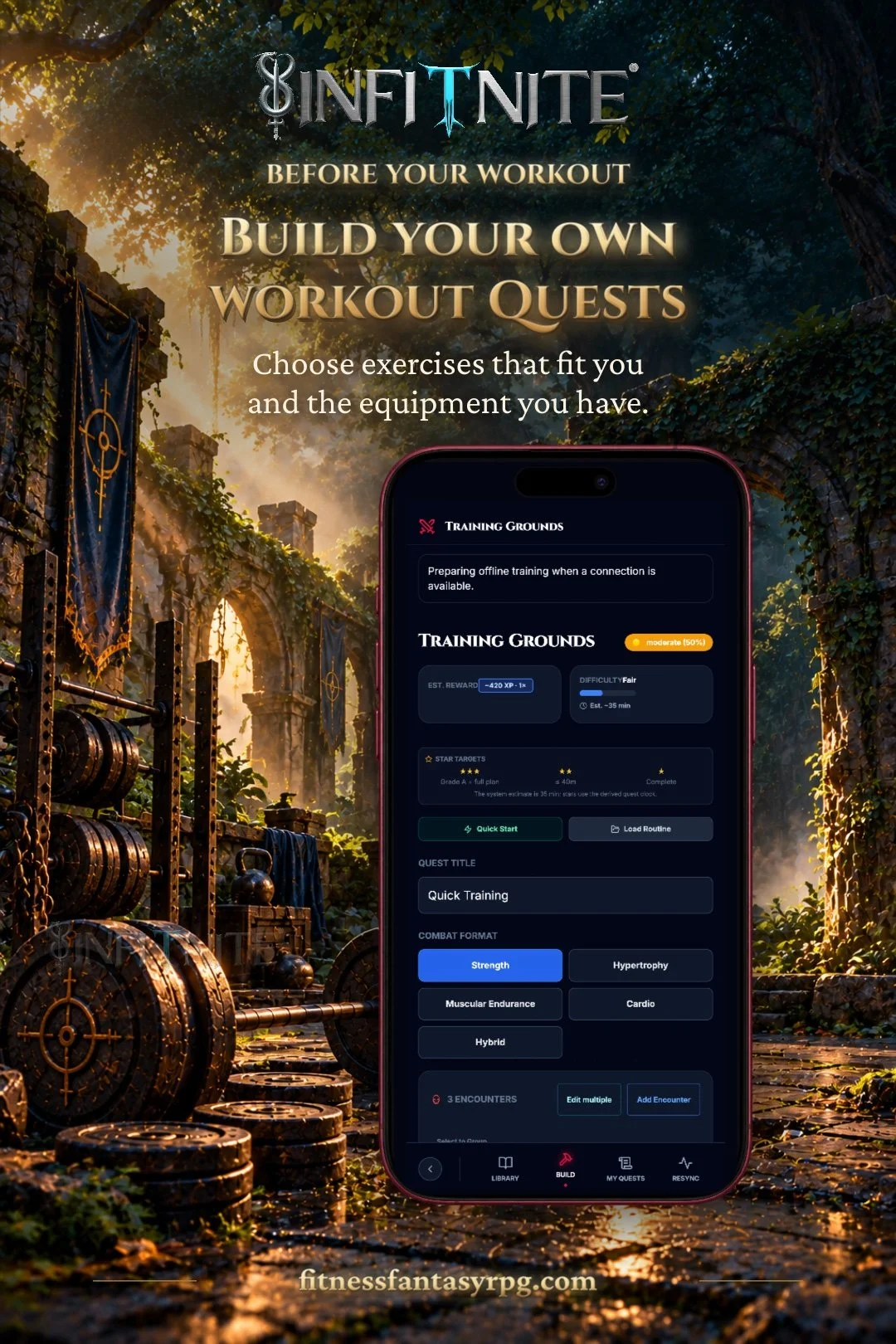
You can bring a routine you already enjoy. The appeal doesn’t depend on throwing away your training plan and doing something unfamiliar. You’re giving that plan encounters to complete.
For example, imagine you already know which exercises you want to do in your next session. You can build that workout in Training Grounds, prepare the targets for your sets, and review the encounters before you begin. When you start training, you have both the workout information and the challenge ahead of you.
If you’re new to tracking, that preparation has a practical job too. You can see what you intended to do before you reach the next exercise. Your plan is something you can refer to throughout the Quest.
The boss challenge adds another reason to prepare. You can look ahead to an encounter you want to complete, then follow its instructions when you reach it. The workout has an objective you’ve chosen to take on.
That anticipation is part of what I want the game to add. Before your first set, there’s already something to look forward to.
Keep your plan and your previous workouts close
Once a workout begins, information needs to be useful where you’re using it.
During your Quest, you can see the planned work for each set and any special instructions for the monster battle. Boss encounters can show their written guidance alongside the workout information, so you can understand the challenge where you’re training.
Your previous workouts have a place in that flow as well. When eligible records are available for an exercise, Infitnite can bring up your earlier sets. You can see the weight and reps you used and choose to apply those values to the set you’re recording.
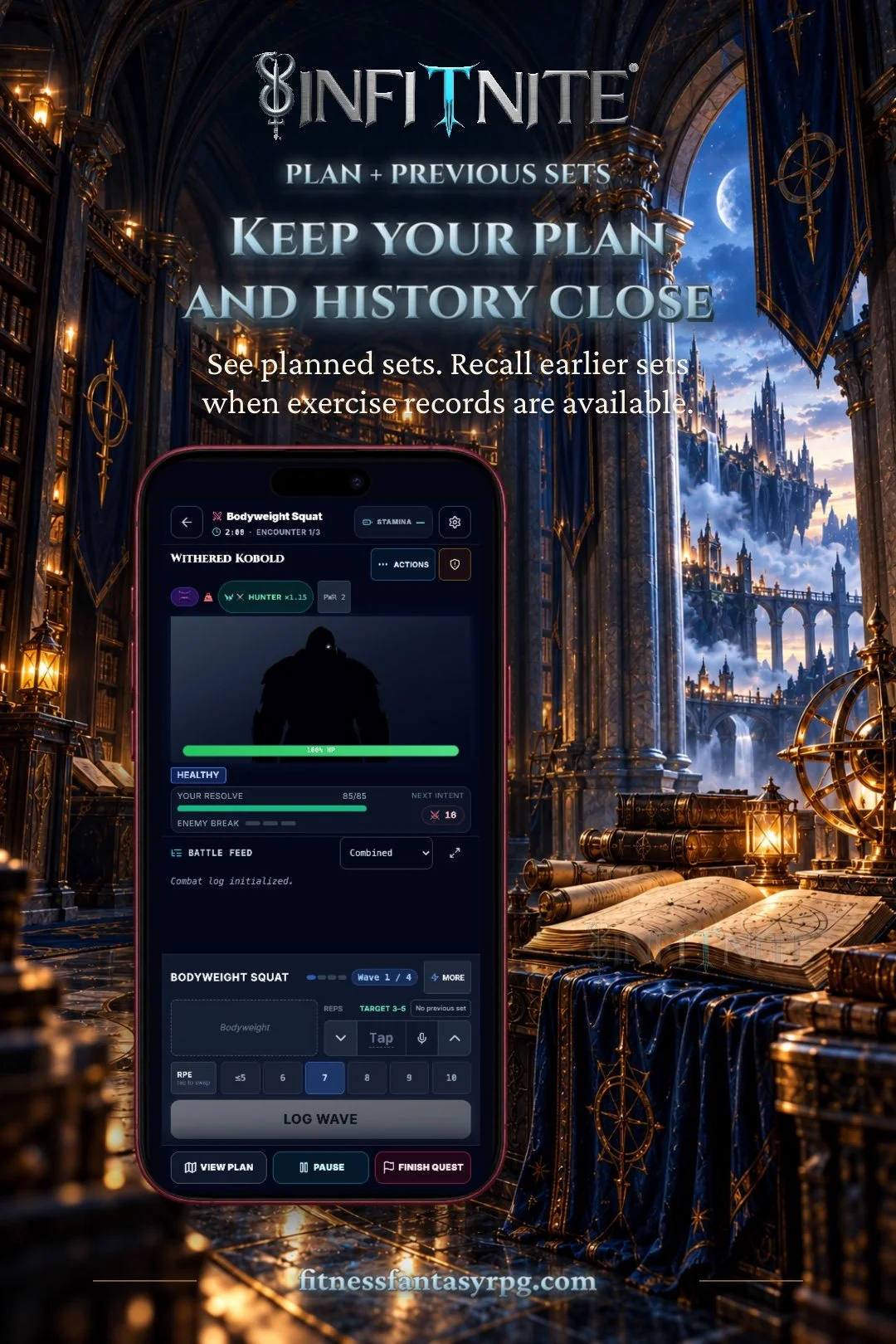
Think about returning to a movement you haven’t done since your last session. In a notebook, you might flip back to find the right workout and look for that exercise. With previous-set recall available in Infitnite, the earlier performance can sit beside the current entry.
You still choose what to do today. Recalling a previous set gives you a reference; it doesn’t mean the app has decided that you should repeat it, increase it, or take on a new goal. And a new exercise needs its own starting point when you don’t have a previous record to recall.
As you record more workouts, you build more history to return to. The practical benefit grows from the information you’ve actually entered.
This is where the workout log and the game can work well together. You have the plan for the current session, relevant history when it’s available, and the encounter that your recorded effort moves forward.
During the workout: make your effort move the battle
Perform a real set, record your reps and weight, and your Warrior attacks. The monster fights back while you recover.
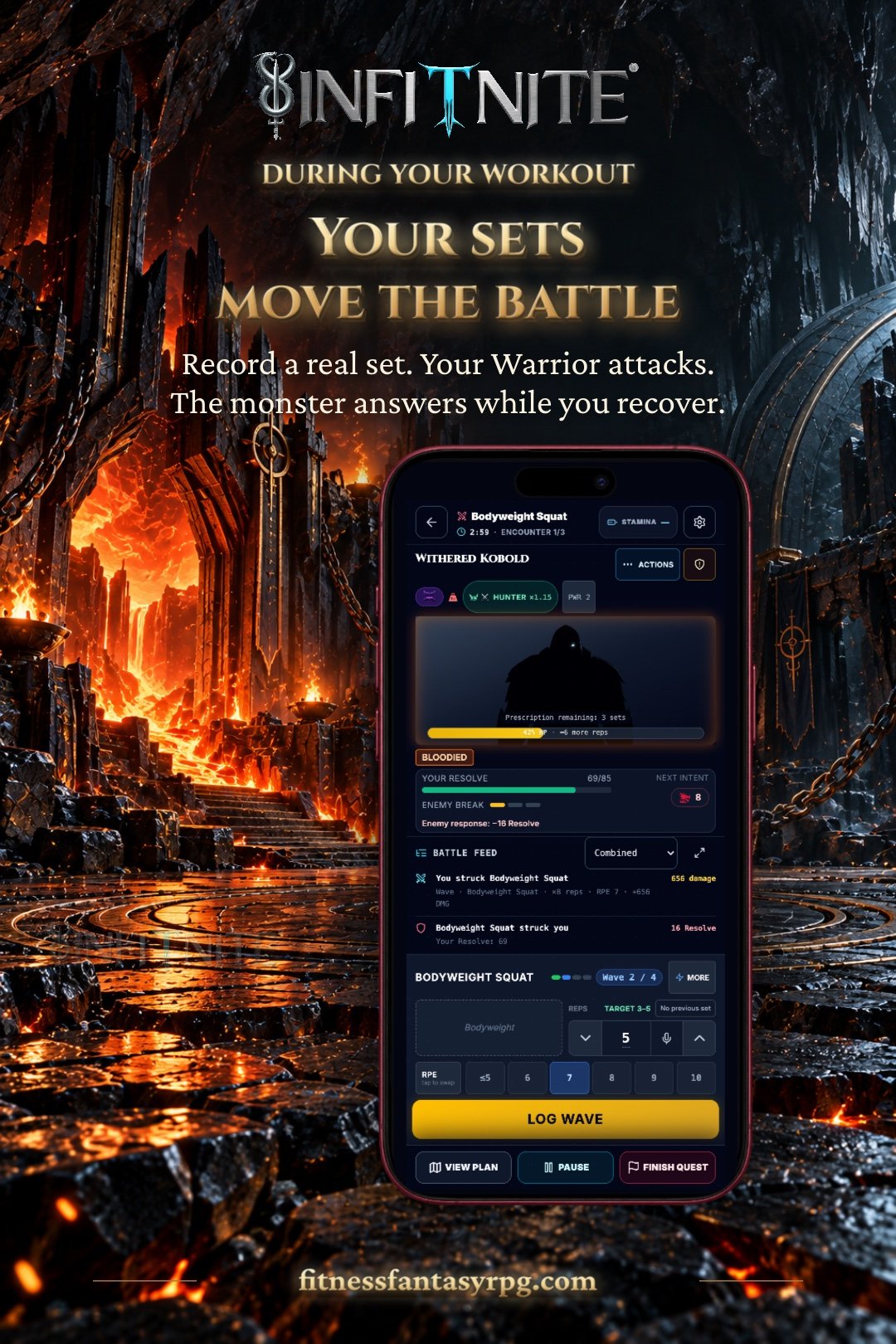
That’s the connection between your workout and the two-way battle. Your training gives you an action to take, and the encounter responds after you record it.
You can follow the fight between sets without interrupting a repetition to react to your phone. The exercise is what you’re doing while you train. After the set, you record the work and see what happens in the battle.
Picture the same workout you prepared earlier. You complete a set, enter what you did, and your Warrior takes a turn. During recovery, you can follow the enemy’s response and see where the encounter stands. When you’re ready for the next set, the planned work is still there to refer to.
The recording serves two purposes. It keeps a useful account of your workout, and it gives the game something to respond to. You have a reason to pay attention to the encounter as the session develops.
For someone who already enjoys training, that can be an extra layer of involvement. You can care about the quality of your workout and enjoy seeing how the fight unfolds. For someone who finds a familiar routine repetitive, the encounter gives the session a challenge with a finish to work toward.
The game’s progress comes from what you record. A completed set should describe the work you actually did. That keeps your training history useful and your Warrior’s development connected to your real activity.
Skills give you abilities to work toward and choices to make
An RPG is more interesting when your character has abilities you can develop and use.
Infitnite’s Skills are game abilities connected to your Warrior. You can explore them in the Constellarium, the place where you explore and manage Skills. Its map, filters, and list view help you find an ability and inspect its details.
Those details explain what a Skill requires and let you manage available equipped abilities. Finding something you want to use can give you another goal to pursue through the game.
Discovery, development, and use each have their own place. Discovering a Skill introduces it to you. Developing it follows that Skill’s requirements. Equipping an available ability puts it among the Skills you can use in your Quests.
Then, when your recorded activity meets an equipped Skill’s readiness requirements, the game lets you know it’s ready. You choose when to activate its ability in the battle.
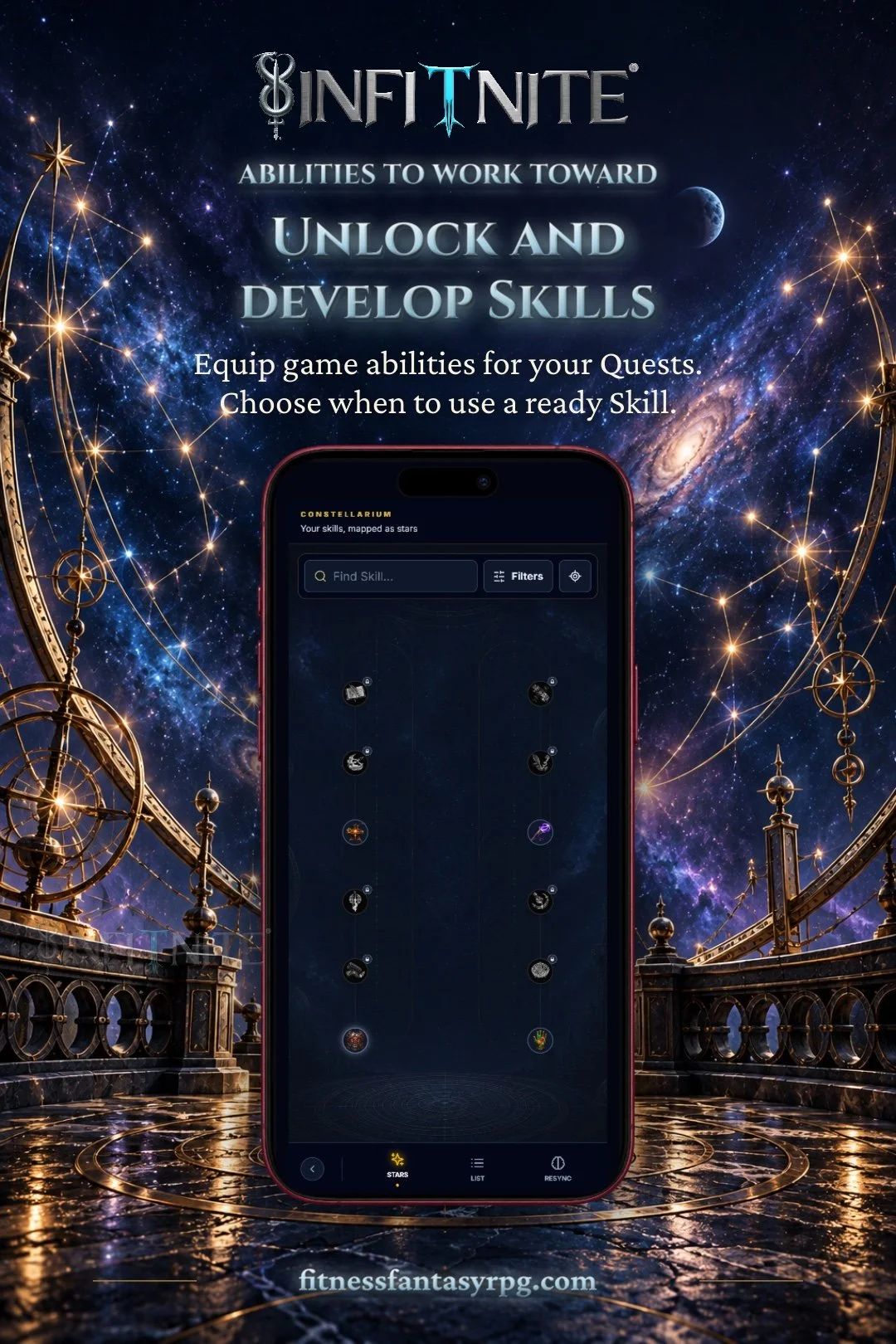
That choice gives you something to consider beyond entering the next set. You can follow the encounter, recognize an available ability, and decide when you want to use it. The requirements and benefits belong to the particular Skill, so its details matter.
You can start by understanding the abilities available to your Warrior. As you become familiar with them, there are more parts of your character’s development to take an interest in alongside the workout itself.
After the workout: see what you completed and earned
Finishing the Quest gives you a result to review.
You can see your Quest score and the Warrior XP and Combat XP you earned. XP means experience points, the progress awarded in the game through eligible recorded activity. Your workout history keeps a record of the work you completed, while your profile displays your Avatar and earned achievements.
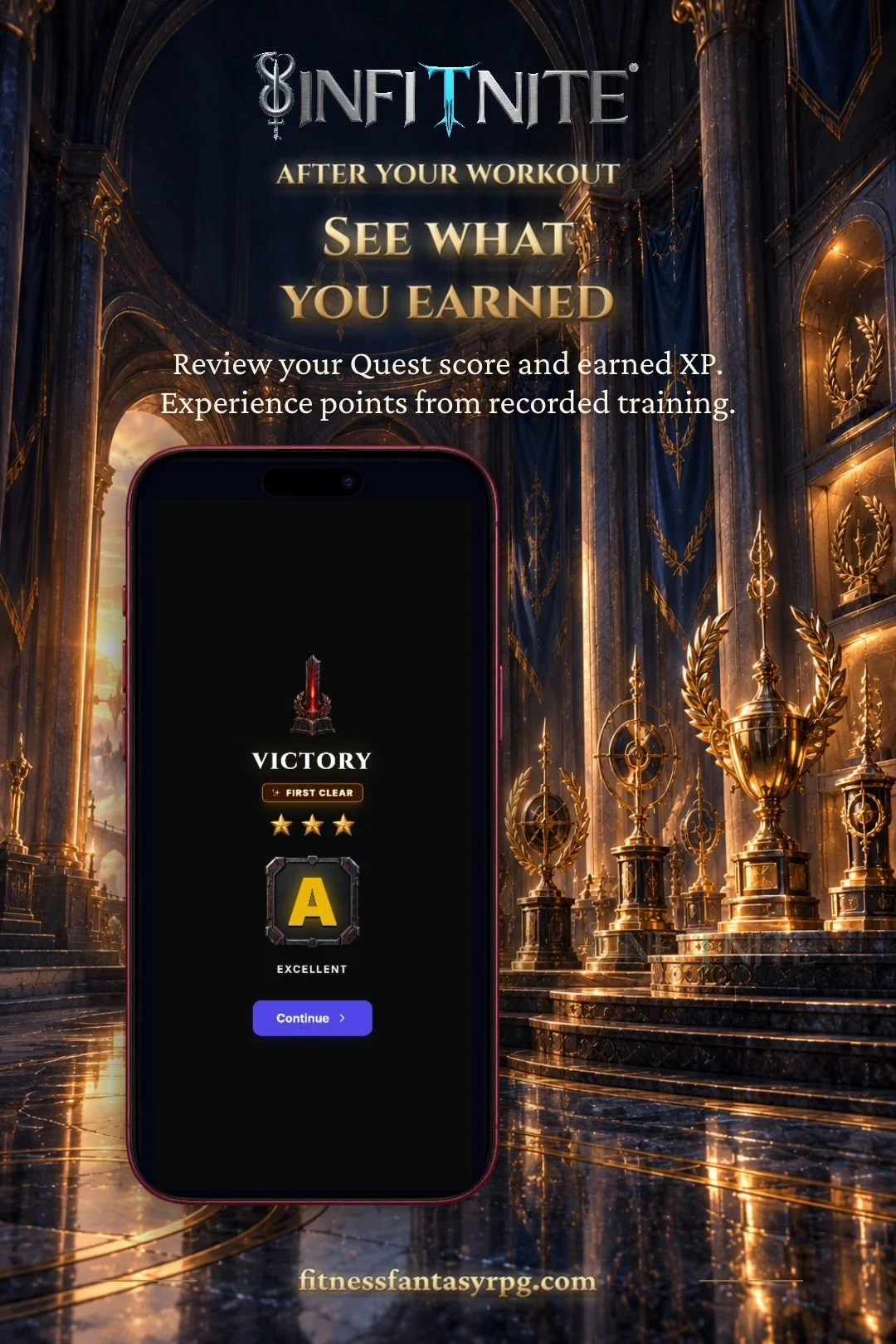
The score gives you information about how the Quest was graded. The recorded exercises and sets tell you what you actually did. Together, they let you look back at the session and see its workout record and game result.
Your body’s progress and your game’s progress are related through your effort, but they’re different kinds of feedback. XP is a game reward. Your recorded sets are the training history you can compare over time. Earning XP isn’t a measurement of how much strength or muscle you gained from that session.
What you can see immediately is that you completed work, recorded it, and earned something in the game through it. You have a Quest to finish today and a Warrior to keep developing across the workouts you complete.
That gives the end of the session a place in the experience too. You can review what happened instead of moving straight from the final set to closing the log.
Your Avatar gives the work an identity you can keep building
There’s a difference between seeing a list of workouts and seeing the Warrior you’ve been developing through them.
Your Avatar is your representation inside Infitnite. The upgraded profile brings your character’s appearance and identity together with the achievements and marks you’ve earned. You can choose which earned achievements to showcase and inspect titles to understand their requirements.
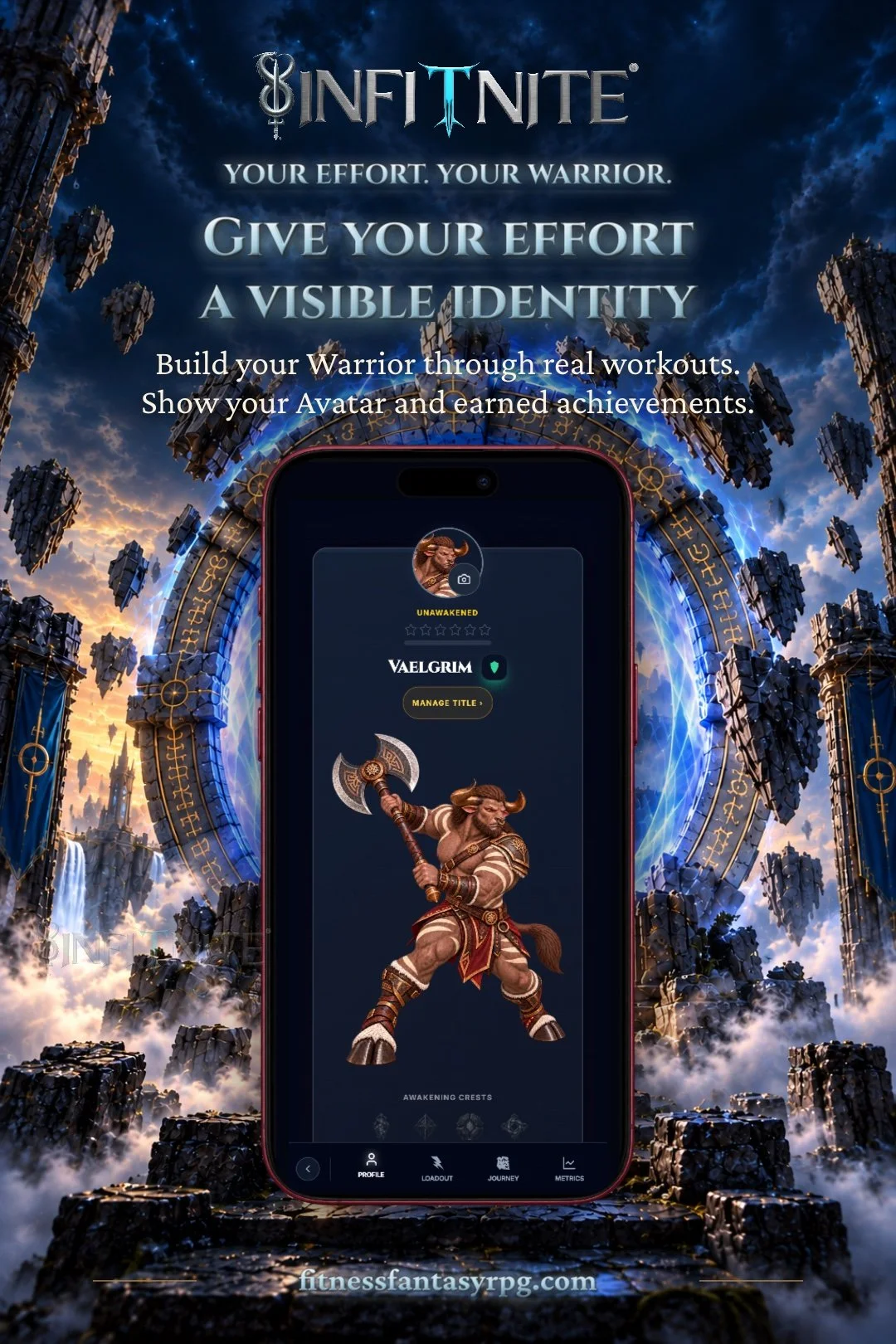
The character gives your activity a continuing presence in the game. One session contributes to a record that belongs to the Warrior you’ll return to next time.
If you already take pride in your training, that identity can be another way to express it. The workout history keeps the details of the work. Your profile gives you a place to display parts of the progress you’ve earned.
And if you’re just beginning, you don’t need a long history to have a starting point. The workouts you complete begin that record. You can build the connection to your Warrior through doing, recording, and returning.
I’ve been a gamer for 30 years and a lifter for 20. That combination matters to me. I want the effort you put into training to have a meaningful place in a game you enjoy coming back to.
You don’t have to be bored with fitness to enjoy this
“From Boring to Badass” describes a possibility, not a requirement for enjoying Infitnite.
You might already look forward to training. You might love your notebook, enjoy seeing your numbers change, and have no interest in replacing the routine that got you here. Bringing that workout into a Quest can give you a battle to enjoy alongside it.
You might enjoy exercising but struggle with recording it. In that case, seeing the encounter respond to a recorded set gives the entry a purpose you can follow right away, while it builds useful history.
Or you might be trying to make a start and find the whole idea of a workout unappealing. A prepared Quest, an objective you can see, and a character you want to develop can give you something more concrete to take an interest in.
The same feature won’t be everyone’s favorite. You might care most about the boss challenge, the Skills, the previous-set information, or the Avatar you’re building. You can discover which part makes the experience worth returning to for you.
What if you don’t know how to put a workout together?
Building a Quest is useful when you know which exercises and targets you want. Choosing that workout can be its own obstacle when you’re unsure how to plan for your goals.
Spellsword’s Crucible is home to the curated Quest Library and is included with Vanguard, Infitnite’s optional subscription. It gives you access to 200+ curated workout Quests drawn from twenty years of creating and refining workouts and programs.
You can begin with a prepared routine rather than having to design everything yourself. That gives you another route into the training experience when choosing and organizing the workout is the part holding you up.
The free route remains available. Pathfinder is Infitnite’s free way to play, including building your own workout Quests in Training Grounds. You can bring a workout you already know and use that builder without needing the curated library.
Which route helps depends on where you’re starting. If you have a routine you enjoy, you can build around it. If you want prepared workouts to choose from, Spellsword’s Crucible is an option within Vanguard.
Give your next workout something to work toward
Start with a workout that fits you and the equipment you have. Build it as a Quest in Training Grounds, review the planned work and encounters, and follow the battle as you complete and record your sets.
Use your previous-set records as a reference when they’re available. Explore a Skill’s details before deciding how you want to use it. When the Quest is finished, look at the workout you recorded, the result you earned, and the Warrior you’re developing through that work.
You can see these features in Infitnite 5.0: Update 2, including the two-way monster battles, previous-set recall, equipped Skills, and upgraded profile.
You don’t have to wait until you’ve transformed your fitness to have something interesting happen with today’s effort. You can prepare a challenge, take part in it, and finish with a record and game progress earned through the workout you actually completed.
Download and play Infitnite free. Build your first Quest or bring the workout you already enjoy, and see what your effort can earn.
Conquer the day,
Walt
About the Author

Walter Chambers, the visionary Founder, Lead Designer, and Master Wizard at Infitnite, brings 15 years of holistic transformation experience. He holds a comprehensive suite of certifications, including Pain-Free Performance Specialist (PPSC*M) Master, NSCA Certified Personal Trainer, Certified Mental Performance Mastery Coach, Certified Conditioning Coach, and Certified Metabolic Nutritionist.
As a lifelong gamer and fitness expert, Walt created INFITNITE, the world’s first Fitness Fantasy RPG, designed for anyone seeking to break through plateaus, discover inner motivation, or push themselves to new heights. Infitnite offers a structured, gamified approach that combines cutting-edge fitness methodologies with immersive gaming principles, guiding individuals on a personalized path to transform their body, mind, and spirit. Through this innovative system, Walt empowers others to unlock their inner warrior and achieve their infinite potential in both personal health and professional life.
Recent Gamification Articles






Learn how to enjoy working out with a goal to prepare for, a battle to follow between sets, and progress to review. Explore the workout loop in Infitnite.