
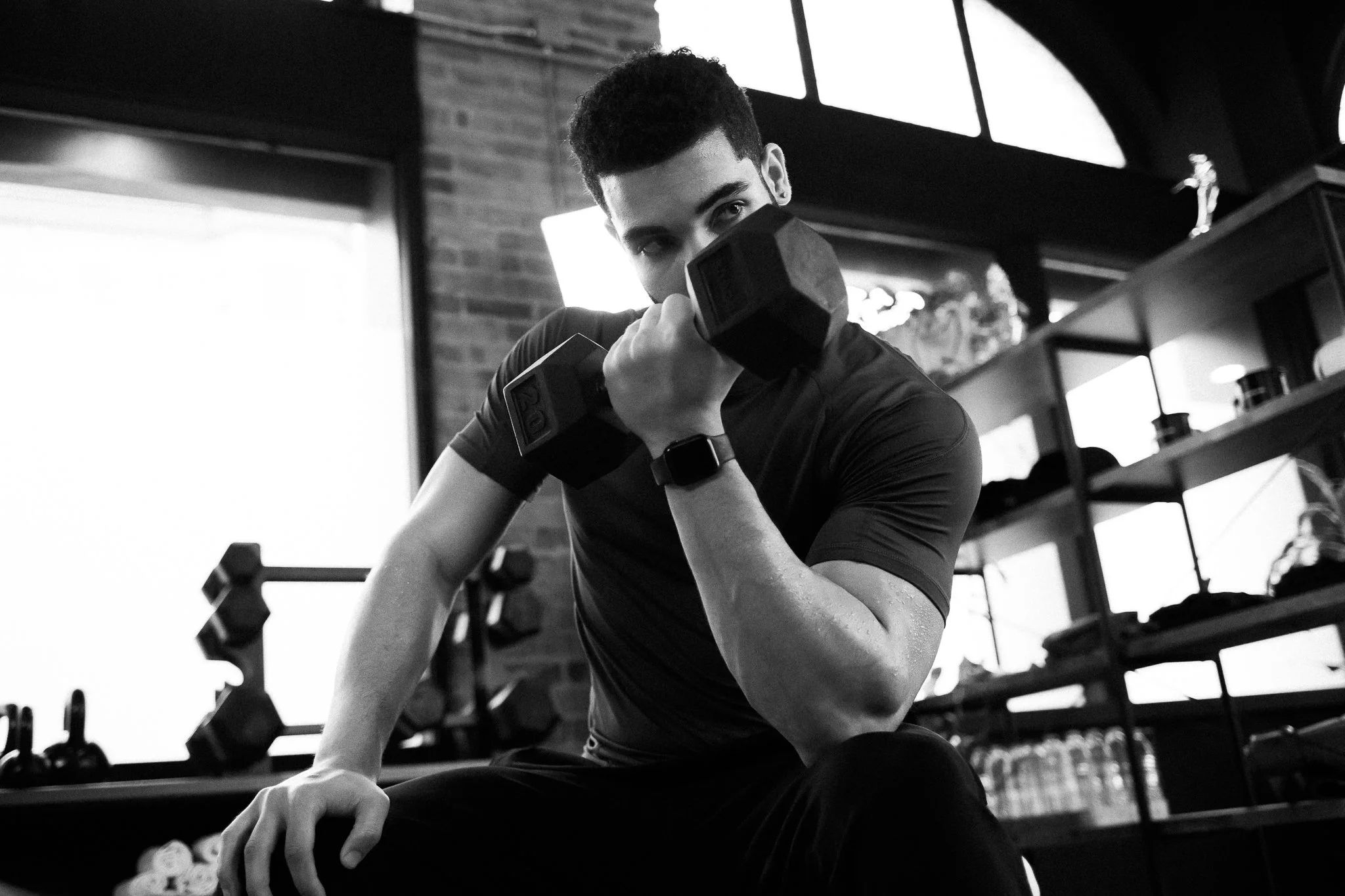
Why “Just Showing Up” Isn’t Enough Anymore
The gym is still the number one place where most people make progress toward their fitness goals.
But it’s also the place where most people waste years.
Not because they aren’t trying hard enough.
Not because they don’t care.
Not because they lack motivation.
They waste time because effort without direction eventually turns into frustration.
If you’re brand new, the gym feels overwhelming.
If you’re returning, what used to work doesn’t anymore.
If you’re experienced, you’re consistent, disciplined, and still not seeing the results you want.
Different starting points. Same problem.
There’s no clear strategy guiding what you’re doing once you walk through the doors.
This article is about fixing that.
Not with complicated science.
Not with influencer workouts.
Not with hyper-specific rabbit holes.
Just a clear, scalable framework for what you should be doing inside the gym to move forward, no matter where you’re starting from.
The First Question Everyone Asks
“What Should I Be Doing in the Gym to Achieve My Goals?”
Most people answer this question by copying what they see.
They follow random workouts.
They chase machines that look busy.
They do whatever their favorite influencer posted that morning.
That approach feels productive at first because anything new creates adaptation.
Strength goes up.
Muscles feel sore.
Sweat equals validation.
But progress built on randomness doesn’t last.
Eventually, plateaus show up.
Motivation drops.
Confidence fades.
The solution isn’t more effort.
It’s a plan.
The Non-Negotiable Foundation: You Need a Program
Progress in the gym doesn't come from individual workouts.
It comes from a program.
That distinction alone eliminates years of wasted effort.
What a Program Actually Is
A program is not a list of exercises.
A program is not a hard workout.
A program is not “leg day” or “push day.”
A program is a 12–16 week strategy designed around:
Your primary goal
Your experience level
Your training preferences
Your ability to recover and stay consistent
Workouts are the tools.
The program is the map.
Without a map, effort only speeds up the moment you get lost.
Why Different People Stall for Different Reasons
Beginners adapt fast. That’s the problem.
Early progress hides poor structure. Plateaus arrive quickly.
Returning lifters rely on old habits.
Their body isn’t the same baseline it used to be, but their approach hasn’t changed.
Experienced lifters repeat what once worked.
Consistency without progression eventually becomes maintenance.
Different situations. Same outcome.
A lack of structured progression.
What a High-Quality Program Should Include
You don’t need complexity. You need alignment.
A solid program should:
Be based on your goal, not trends
Match your experience level
Use a frequency you can sustain
Progress intentionally over time
Build recovery into the structure
If any one of those is missing, progress slows or stops.
The First 10–15 Minutes in the Gym
Where Most People Are Already Off Track
Watch what happens in most gyms.
People walk in.
Jump on a treadmill.
Rush to a rack or machine.
Or start lifting cold.
Sometimes they do it because the gym is busy.
Sometimes because that’s what they’ve always done.
Either way, it’s backwards.
Going straight into heavy sets without preparation is like running into battle with a dull sword.
You can do it.
But it won’t be effective.
And it won’t end well long term.
The Modern Warm-Up: Preparation, Not Tradition
The purpose of a warm-up is not to sweat.
It’s not to burn calories.
It’s not to “get loose.”
The purpose of a warm-up is to increase performance and reduce risk.
A proper warm-up should do three things:
Restore what’s tight or restricted
Activate what’s underperforming
Prepare the nervous system for force and coordination
That’s it.
The Six-Phase Dynamic Warm-Up
A complete warm-up system moves through these phases:
Soft tissue techniques
Positional stretching
Corrective exercises
Activation drills
Movement pattern development
Central nervous system stimulation
Not every phase needs to be long.
Not every phase looks the same for every person.
Beginners need more restoration and activation.
Experienced lifters need more specificity and neural preparation.
The goal is readiness, not exhaustion.
And “feeling” like your ready isn’t enough.
During the Workout: How You Train Matters More Than What You Train
This is where most people sabotage themselves.
They chase weight instead of quality.
They rush reps instead of controlling them.
They measure effort by exhaustion instead of improvement.
Slow Things Down Before You Speed Things Up
Three variables drive progress:
Load
Tension
Technique
Most people only focus on load.
Reducing weight temporarily allows you to:
Increase time under tension
Improve stabilizer strength
Clean up technique
Build a stronger foundation
Control always precedes intensity.
Rest Times: The Most Underrated Variable
Rest is part of the workout.
Scrolling.
Texting.
Flipping through songs.
All of that breaks focus and degrades performance.
Your rest time should support your next set, not distract from it.
Put on a mix.
Track your rest.
Stay intentional.
Tracking What Actually Matters
Tracking isn’t obsession.
It’s feedback.
At minimum, track:
Sets
Reps
Load
Rest
Performance trends
If you repeat exercises over time and nothing changes, neither will your results.
Technique Feedback Without Ego
Filming your sets isn’t about social media.
It’s about learning.
Small adjustments in movement quality often unlock progress when effort alone stops working.
This becomes increasingly important the more experienced you are.
The Cool-Down: The Shortcut Most People Skip
Training is the stimulus.
Recovery is where adaptation happens.
Ignoring recovery doesn’t make you tougher.
It just shortens your runway.
A Simple, Effective Cool-Down
It doesn’t need to be long.
A solid cool-down includes:
Parasympathetic breathing: 1–2 minutes
Soft tissue work: 1–2 minutes per region
Targeted stretching: 1–2 minutes per side
That’s enough to shift your body toward recovery and set up the next session.
Most people skip this entirely.
Then wonder why their joints hurt and progress stalls.
How This Framework Scales Across Experience Levels
This system doesn’t change.
The emphasis does.
Beginners
Learn structure
Build consistency
Focus on technique and habits
Returning lifters
Respect the new baseline
Rebuild intelligently
Avoid ego-driven intensity
Experienced lifters
Refine execution
Track variables closely
Prioritize recovery and progression
Same framework.
Different focus.
Direction Beats Effort Every Time
The gym rewards intention.
Effort without structure leads to frustration.
Consistency without progression leads to stagnation.
Intensity without preparation leads to injury.
A clear program.
A proper warm-up.
Intentional execution.
Planned recovery.
That’s the difference between spinning your wheels and moving forward.
You don’t need perfection.
You need direction.
And once you have that, the gym stops being confusing and starts becoming productive again.
Strength Is the Next Level
One of the most important qualities you can build for long-term pain-free performance, longevity, and aesthetics is strength.
In Infitnite, strength isn’t just about how much weight you lift. It’s a core attribute that reflects how well you produce force across fundamental movement patterns: squatting, hinging, lunging, pushing, pulling, and carrying.
If you want to improve your strength, you first need awareness.
You need to know where your strength actually is and where limitations are quietly holding you back in the gym. That clarity is what allows your training to become targeted instead of generic.
That’s exactly what the award-winning Strength Trials are designed to provide.
In less than 10 minutes, this assessment helps you evaluate your current strength across multiple movement patterns, uncover blind spots, and gain immediate clarity on what to prioritize next, so every workout moving forward has purpose.
About the Author

Walter Chambers, the visionary Founder, Lead Designer, and Master Wizard at Infitnite, brings nearly 15 years of professional holistic transformation experience. He holds a comprehensive suite of certifications, including Master Pain-Free Performance Specialist (PPSC*M), NSCA Certified Personal Trainer, Certified Mental Performance Mastery Coach, Certified Conditioning Coach, and Certified Metabolic Nutritionist.
As a lifelong gamer and fitness expert, Walt created INFITNITE, the world’s first Fitness Fantasy RPG, designed for anyone seeking to break through plateaus, discover inner motivation, or push themselves to new heights. Infitnite offers a structured, gamified approach that combines cutting-edge fitness methodologies with immersive gaming principles, guiding individuals on a personalized path to transform their body, mind, and spirit. Through this innovative system, Walt empowers others to unlock their inner warrior and achieve their infinite potential in both personal health and professional life.
Recent Updates







Why I moved Infitnite off Trainerize and Xperiencify, what I learned from working within those platforms, and what having our own app lets me build next.